Dear Friends,
It’s been a busy few months for American Promise as the election cycle came to an end. The state judicial elections in Pennsylvania ran up an eight-figure price tag, drawing unusual attention from a coterie of billionaires. Numerous state legislative seats in Virginia cost more than $2 million. Even in New York City and New Jersey — both with public-financing programs intended to amplify small donors — a handful of elite interests funneled tens of millions toward their preferred candidates. (You can read our full statement here.)
Nobody wants this system. Nobody asked for it. But there is one silver lining to all the madness: There have never been so many eyes on our cause.
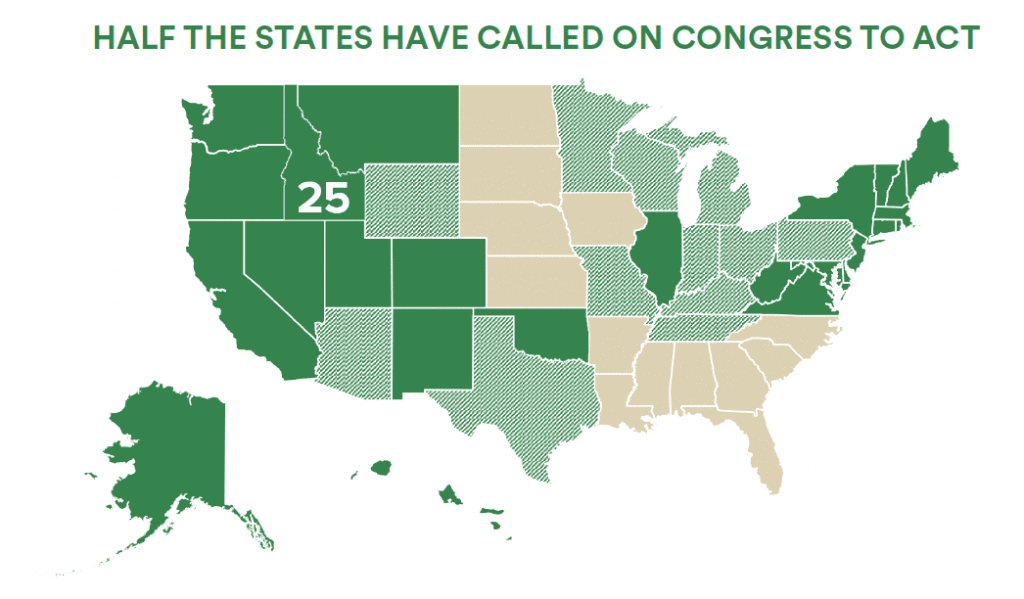
In March, Utah became the 23rd state to formally back an amendment, and we’re riding that momentum into the upcoming year. In 2026, we are prioritizing states like Idaho and Ohio, along with other key states where we expect to see continued progress. We will have more on our 2026 strategy in the weeks ahead.
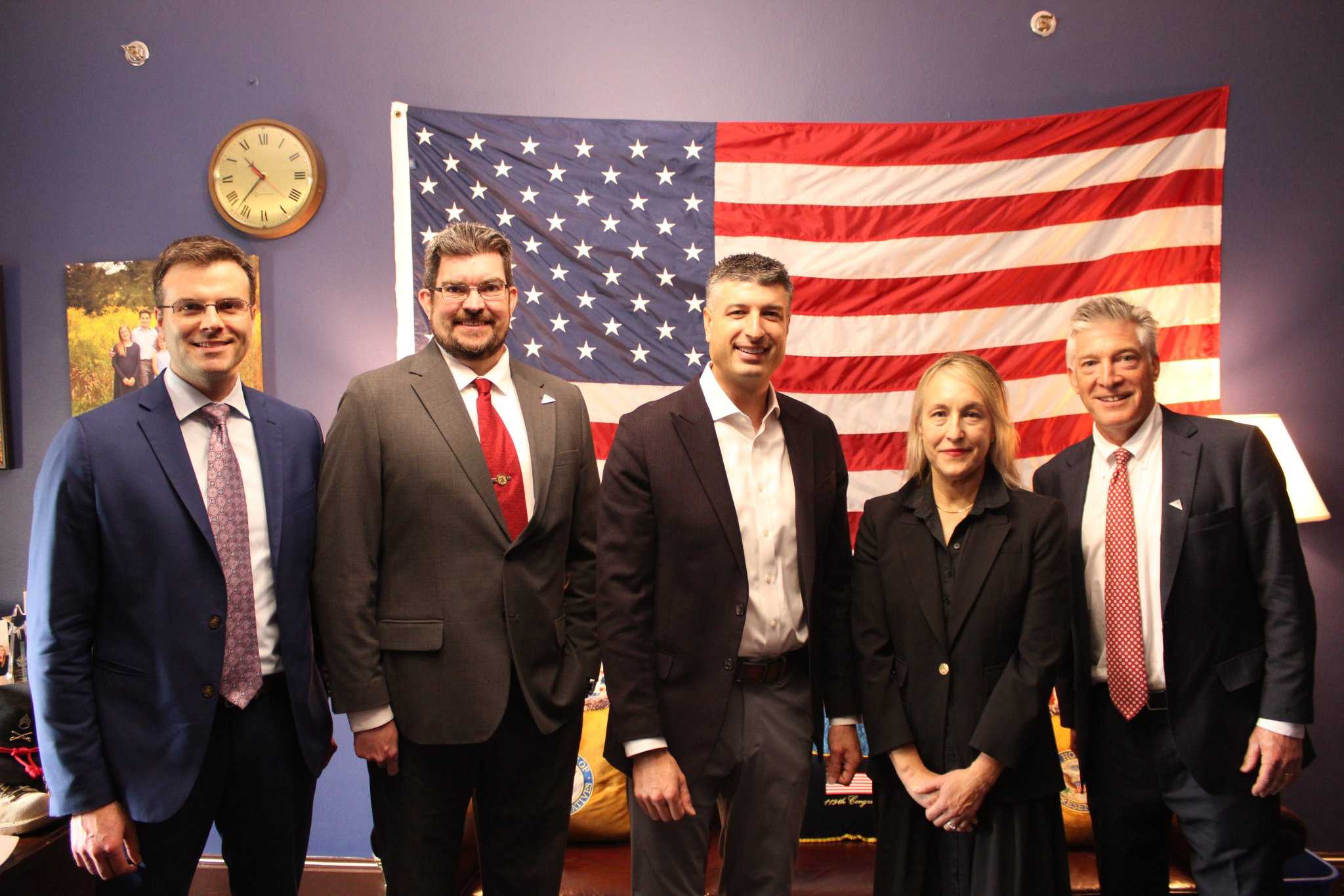
Every month, our support on Capitol Hill continues to grow. Between Labor Day and Thanksgiving, we held 52 meetings on the Hill, including with key staffers of the Senate Republican leadership team, House Judiciary Committee, House Freedom Caucus, and House Republican Study Committee. As you know, we already maintain a steadfast base of support among Democratic members, so we are focused on securing backing from congressional conservatives. Earlier this fall, we briefed an influential group of House Republicans alongside some of our state legislator champions: Texas Sen. Angela Paxton, Wyoming Sen. Ed Cooper, and Pennsylvania Sen. David Argall.
Our investment this past year in communications and media is paying dividends. These wins add value across the entire organization, from political coalition building to volunteer recruitment and fundraising. We hope to publish several more op-eds in the coming months, and we’ve also shepherded pieces by key state allies: Paxton and Cooper, as well as Rep. Derrin Owens in Utah.
I recently appeared on Anthony Scaramucci’s podcast, where we discussed how special interests have stacked the deck — and why an amendment is the only solution. American Promise has also launched a podcast of our own: “For Our Freedom” debuted last month, and our first episode features an outstanding interview with Paxton, Republican sponsor of a resolution in the Texas Senate. Already this year, we have seen an increase in our media coverage and attention to both the issue and our organization. Our podcast placements also provide a wealth of short video content and help boost our message to new audiences.
We cannot thank our Board, advisors, and investors enough — none of this progress would be possible without your continued support, which allows us to continue growing and expanding our network. We are grateful for your support and belief in our mission. While we enter 2026 in a sound financial position, we still have a long way to go to meet our ambitious fundraising goals, so please keep making connections for us.
Next month marks the 50th anniversary of Buckley v. Valeo, the infamous Supreme Court decision that first equated political spending with speech. As America approaches 250, our movement is on track to end the Buckley era long before Buckley turns 55, thanks to your ongoing efforts. We will have plenty of news to share in the coming months. In the meantime, please be in touch with me or Anastasia if you have any questions, suggestions, or introductions.
We launched American Promise together because we know that without a constitutional course correction, there is no off-ramp from the unraveling of American democracy by increasingly out-ofcontrol big money factions.
With a $20 billion election in 2024 behind us, Americans across the political spectrum see that the crisis has arrived.
2025 was our moment to accelerate the constitutional solution they want. Thanks to you, we were ready.
From Ohio to Utah, we put our proven state-led model to work in 11 states. We listened to people on the ground, built relationships with voters, civic and business organizations, and legislators, and helped them advance resolutions backing our amendment and urging Congress to act. These state-led campaigns create upward pressure on federal lawmakers and help ensure states are ready to ratify when the moment comes.
Utah became the 23rd state to call on Congress to support a constitutional amendment to address the money-in-politics crisis. This victory was powered by testimony from Weber State University student Kalijah Robinson and the Utah-based Sutherland Institute, underscoring the importance of local partnerships and coalitions.
We helped legislators in Texas, Arizona, and Minnesota introduce resolutions supporting an amendment.
We worked with lawmakers in the Wyoming Senate and Oklahoma House of Representatives to pass resolutions, laying the groundwork for success in the next legislative session.
We also helped secure introduction of a new resolution in Ohio and continue to press forward on pending resolutions in Pennsylvania and Wisconsin.
We are carrying this state-led momentum into 2026. Whether you spoke with your legislators, wrote a letter to the editor, or invested in this work, your support has been crucial to every step of this progress.
Earlier this year, we expanded our team, welcoming Bob Noziglia as our director of congressional affairs. Bob works closely with CEO Jeff Clements, Chief Program Officer & General Counsel Brian Boyle, and President Anastasia Khoo — who is based in Washington — to build strong relationships in Congress and keep a steady drumbeat at the federal level.
Our investments in Washington are paying off. In September, we held a Lobby Day with 30 in-person meetings with House and Senate staff. Our state legislator champions joined these efforts via a briefing with the Republican Study Committee, an influential caucus of House conservatives. Bringing our state legislator leaders together with their federal colleagues was a key moment for our state and federal strategy.
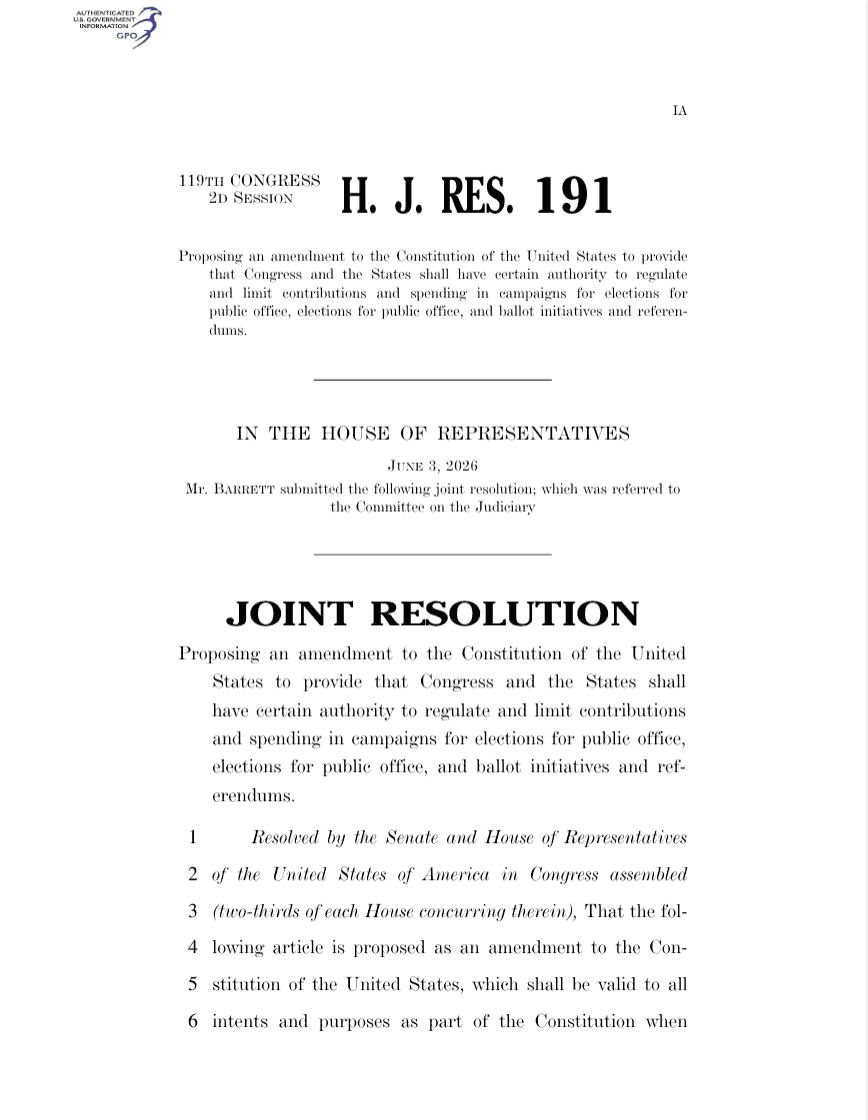
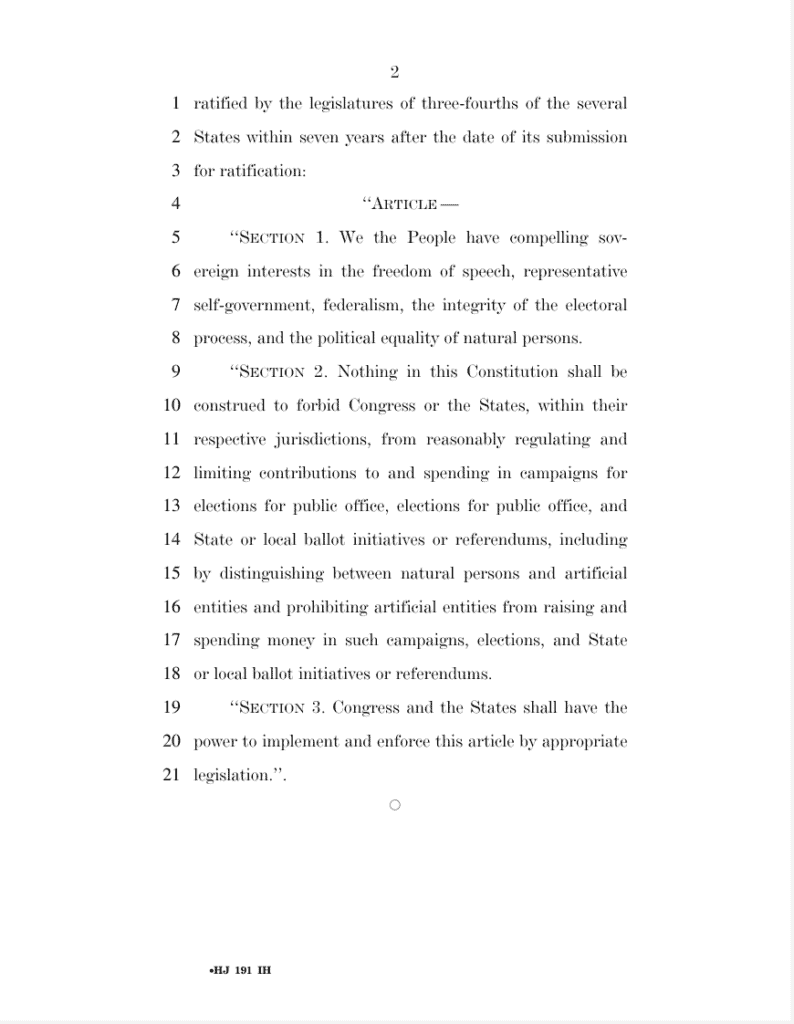
Calls for constitutional reform are gaining ground in Congress. In September, lawmakers introduced a joint resolution for a constitutional amendment to limit campaign spending, rein in corporate money in elections, establish public financing for qualified federal candidates, and restore states’ authority to set reasonable spending limits in their own elections. We welcome this growing amendment energy. It builds momentum behind the For Our Freedom Amendment — which already enjoys broad, cross-partisan support and formal calls to act from 23 states — and it strengthens our connections in Congress.
Legislators in both parties support the For Our Freedom Amendment, and we will continue working closely with Democrats and Republicans to keep making progress.
Beyond the statehouses and Washington, we expanded a network of partners who are helping make the amendment their own — from business leaders to civic groups to young activists.
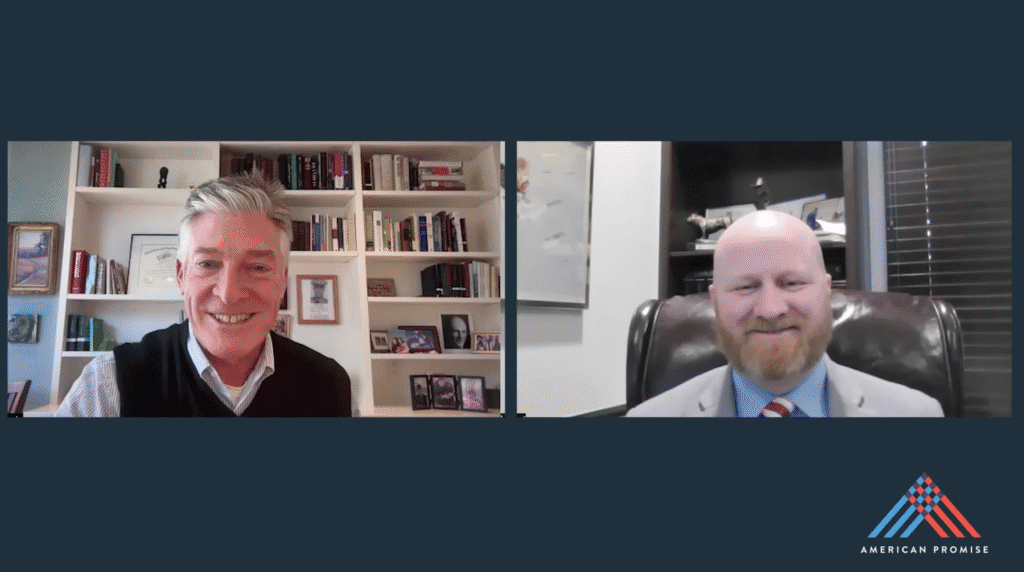
This October, American Promise CEO Jeff Clements led a briefing with the Texas Business Leadership Council to discuss how money in politics distorts markets and business decision-making, and in November, connected with its leaders in person in Texas. Also in October, Jeff and American Promise volunteer Dave Black also spoke on a Young Presidents’ Organization panel, moderated by journalist John Avlon, on “Real World Solutions to Eliminate Dark Money in Politics.” Through these conversations and meetings with local Rotary clubs and other business organizations, we continued to grow a cohort of business leaders who see the For Our Freedom Amendment as essential to a healthy economy.
At the same time, we invested in the next generation of leaders. With more than 10 campus events nationwide, we connected with students and young organizers, bringing new voices and energy into the movement for a constitutional amendment.
We are excited to welcome three new members to our Board of Directors. Their leadership and guidance will be invaluable as we continue forward in our fight for the For Our Freedom Amendment.
Lindsay Smith Kafka has had a varied career spanning the practice of law, higher education fundraising, and nursing. The first half of her career was spent as an estate planning and elder law attorney, and from there she transitioned to planned giving fundraising for two universities. In 2019, Lindsay pursued her long-held dream of becoming a nurse, and after having grown up and lived most of her adult life in Concord, Massachusetts, she and her husband relocated to the White Mountains of New Hampshire in 2020. After almost three years as a bedside home hospice nurse, Lindsay is now working in the community and public health setting providing education about living with serious illness and end-of-life matters. In addition to her professional work, Lindsay has served on numerous nonprofit boards, and she brings her nonprofit fundraising and governance experience to her work for American Promise.
Luke Williams has broad experience in business as a professional manager and entrepreneur. He served as president of Total Tree Care from 1990 to 2014. He also founded and served as president of Arbor Energy from 1994 to 2014. The company is a second-generation tree service company that Luke positioned and sold to Davey Tree Care in 2014. In 2018, Arbor Energy merged into a Joint Venture with Bantam and Wesson Energy companies and rebranded as Valiant Energy with headquarters in Waterbury, Connecticut. In 2011, Luke founded Oak Tree Development, a commercial real estate development company in the Connecticut market. Luke serves on several boards in Connecticut and is the current chair of the Young Presidents’ Organization Democracy Group.
John Storr is the founder of two political reform groups, Democracy Restated and Pass The Torch, and serves on the board of US Term Limits. He is a lawyer and investor, with a J.D. from Columbia Law and a B.A. in History from Brown University. He wrote and published a book on a rare condition that one of his five children has, titled, “PraderWilli Syndrome: How Parents and Professionals Struggled and Coped and Made Genetic History.” He lives in San Marino, California.
As we launch our aggressive 2026 plan in the states and Congress, we encourage you to consider making a year-end contribution to either American Promise (501(c)(4)), American Promise Education Fund (501(c)(3)), or both, if you have not yet completed your 2025 philanthropic investments. There are a variety of ways to give to American Promise, including by check, wire transfer, stock transfer, and online, and we would be happy to answer any questions or discuss your plans with you. Many of our donors find that transferring appreciated assets is both convenient and has capital gains tax benefits. Also, our accountant tells us that certain limitations on tax-deductibility in 2026 may justify accelerating 2026 contributions to 2025. Please consider your own situation and consult your tax professionals, but this may be a tax-efficient option for you to make a greater impact with your contribution. Please reach out to Chief Development Officer Liz Harvey (lizh@americanpromise.net) if you have any questions or to discuss how you can help drive our future progress through your high impact investment.
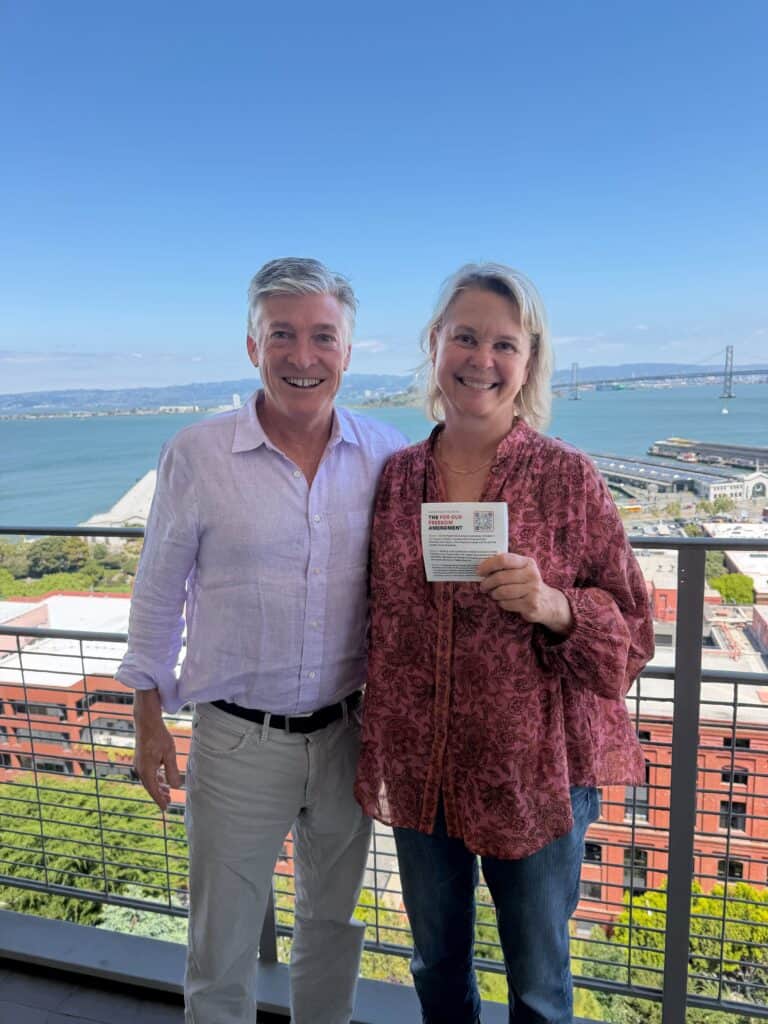
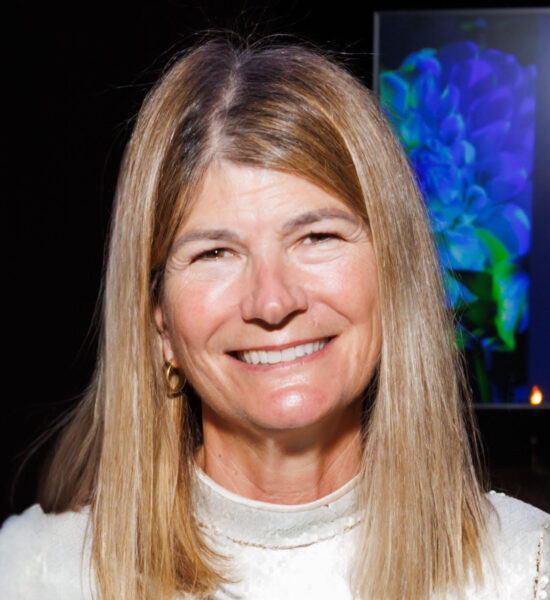
Martha came to American Promise this year and has already been hosting events and making introductions, helping to grow our community of investors. Martha lives in San Francisco, California.
I’m retired. I was previously in advertising and brand strategy consulting. Then I took some time off to raise my kids, and now I do primarily philanthropy and civic leadership, serving on nonprofit boards and doing what I can in the political space.
Government dysfunction is my preoccupation. I’m fully preoccupied with the fact that the government isn’t working anymore, why, and what I can do to help fix it. The desperation around that question is what brought me to American Promise. It started around 2012 with the Romney campaign. Even then, I felt like the Republican Party was moving further right. I co-founded an organization called WomenRUN to find and fund center-right Republican women to run for federal office in order to bring more compromise and cooperation to the federal government. Who would have thought that despite any effort I or anyone else has made, it has gotten infinitely worse in both the Republican and Democrat parties in the 13 years since?
Now, I’m primarily seeking out organizations working on process reforms and systemic change. That has brought me to American Promise. I continue to engage with No Labels because I love what they do to promote bipartisanship and to build relationships and trust. So when there is an opportunity in the House and Senate for the Democrats and Republicans to work together on our most pressing national issues, they have those relationships to co-create legislation, like with the bipartisan infrastructure bill. I think that kind of bipartisan work is critical, but it is not solving the polarization problem on its own. I’m not sure that American Promise will solve it either, but at least we will spend less on political philanthropy to run a dysfunctional government. Maybe then we could reallocate that money toward addressing social issues through traditional philanthropy.
Desperation. Desperation because I have four children. I’m the tail end of the baby boom. We went from “greatest generation” and the leadership and sacrifice they demonstrated to this what’s-in-it-for-me selfishness. We, as baby boomers, have completely failed to demonstrate the importance of personal sacrifice and collective good to the following generations. But I see in my kids’ cohort a greater willingness to sacrifice and engage with public service and give back. When you have kids, you have to engage in trying to make things better because they are the future, and we can’t hand this off to them the way that it is — with all our debt and dysfunction.
I am reading “1929” (Andrew Ross Sorkin) and am distressed about the parallels between then and now. I think of myself as a center-right lover of freedom, but when you read what went on in the ’20s in terms of the financial markets, it helps explain why the government came in to regulate. But I think any regulation should be constantly evolving and reimagining, because human nature is such that people always find a work-around to exploit regulations. If it isn’t reimagined for whatever the new work-around is, it starts to bog down the government and be counterproductive.
For news, I read The Wall Street Journal, The New York Times and Apple News publications. But I also get an email newsletter called Tangle. On the lead issues in the news, they provide what the right is saying, what the left is saying, and their take. I really like that perspective because it helps me better understand. I am a center-right Republican, but I don’t buy into the extremes of either of the parties. I’m in the common-sense majority. I like getting that balanced view.
I listen to the “All-In” podcast because it helps me understand the rationale for what Trump is doing. Even if it may not be a good rationale, I still want to hear it. I’m actively trying not to feel like these are people I can’t agree with or understand — on either of the extremes.
If you spend too much time going down the doom-loop of whatever partisan media you watch or read, it helps to be recentered. Not just recentered in what is factual, but recentered in what other people are thinking so that you can restore the humanity of the people on the other side of arguments. They are people who share similar concerns but have a different way of addressing them. We can’t allow ourselves to think of them as bad or evil or wrong.
I would say more generally I love the people who hold the middle ground. I really admire Kyrsten Sinema and Joe Manchin for having held their ground on the filibuster during the Biden administration. I admire Sens. Lisa Murkowski, Susan Collins, and Bill Cassidy, who will (hopefully) hold their ground on the filibuster when the Republicans try their hand at eliminating it. The filibuster helps keep our government representing the majority of Americans. Through the concentration of executive power and the almost total abrogation of legislative responsibility, we flip-flop between two extreme ideologies from one administration to the next. That was supposed to be the role of the Senate, to be a deliberative body that had to work together to find compromise that represented the majority of Americans. No one seems to want to do that anymore, which is very disappointing. I admire Sinema and Manchin for holding that ground and I hope to be able to admire some Republicans for doing the same.
Historically, I admire Ronald Reagan and Tip O’Neill. Those are two people with different political ideologies who were able to be friends and solve problems for the American people without feeling like they had to get everything their way. One of the most disappointing things about politics today is that candidates sell to their voters the idea that you can have it exactly your way. And we’ve made young people think one or the other ideology has to win, when the win actually comes when we compromise somewhere more in the middle, where the majority of Americans live.
Desperation drew me to American Promise. I loved learning that what happened with Citizens United was just the final blow to the idea of being able to regulate the amount of money we spend on political elections, and learning that equating free speech with money started in the ’70s. It doesn’t have to be that way. As a political philanthropist — someone who donates to candidates, often both Republicans and Democrats in the middle — the requests that I get are more and more frequent from across the country. They are for both direct contributions and larger and larger PAC contributions. This is not conducive to a representative government. Hopefully, curbing political contributions will make it less of an industry. If there is less money flowing into the industrial complex of politics, there may not be so much motivation to outdo one another, to win at the other side’s expense. People will be spending less time raising money and more time actually doing the job of legislating. That could, perhaps, help to solve some of our political polarization. But at the least, it will mean we spend less money having such a dysfunctional government.
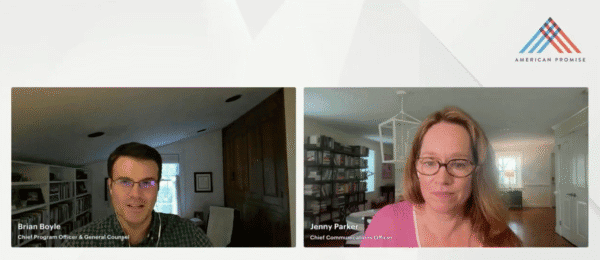
This month, we launched a podcast series showcasing the voices and leaders behind the For Our Freedom Amendment movement. State Sen. Angela Paxton joined CEO Jeff Clements to discuss the problem of foreign money in elections, and why lawmakers need the For Our Freedom Amendment to act to protect our elections.
Leaders across the country are making their voices heard about the problem of money in politics and calling for a constitutional solution.
If you haven’t done so, contact Liz Harvey at lizh@americanpromise.net to learn how you can make a commitment to invest in American Promise’s growth and expansion in new states and in Washington. It’s an all-hands-on-deck opportunity to make history in the next few years!
Contact our Director of Ambassador Program Carolina Hojaij at carolinah@americanpromise.net to learn how you can become an American Promise Ambassador. Our Ambassadors are funders and allies dedicated to expanding our network and introducing others to the American Promise movement.
Join our grassroots volunteers by contacting Director of Mobilization Mike Monetta at mikem@americanpromise.net. Opportunities include everything from talking with neighbors and colleagues to writing letters to the editor and gathering pledges from elected officials.